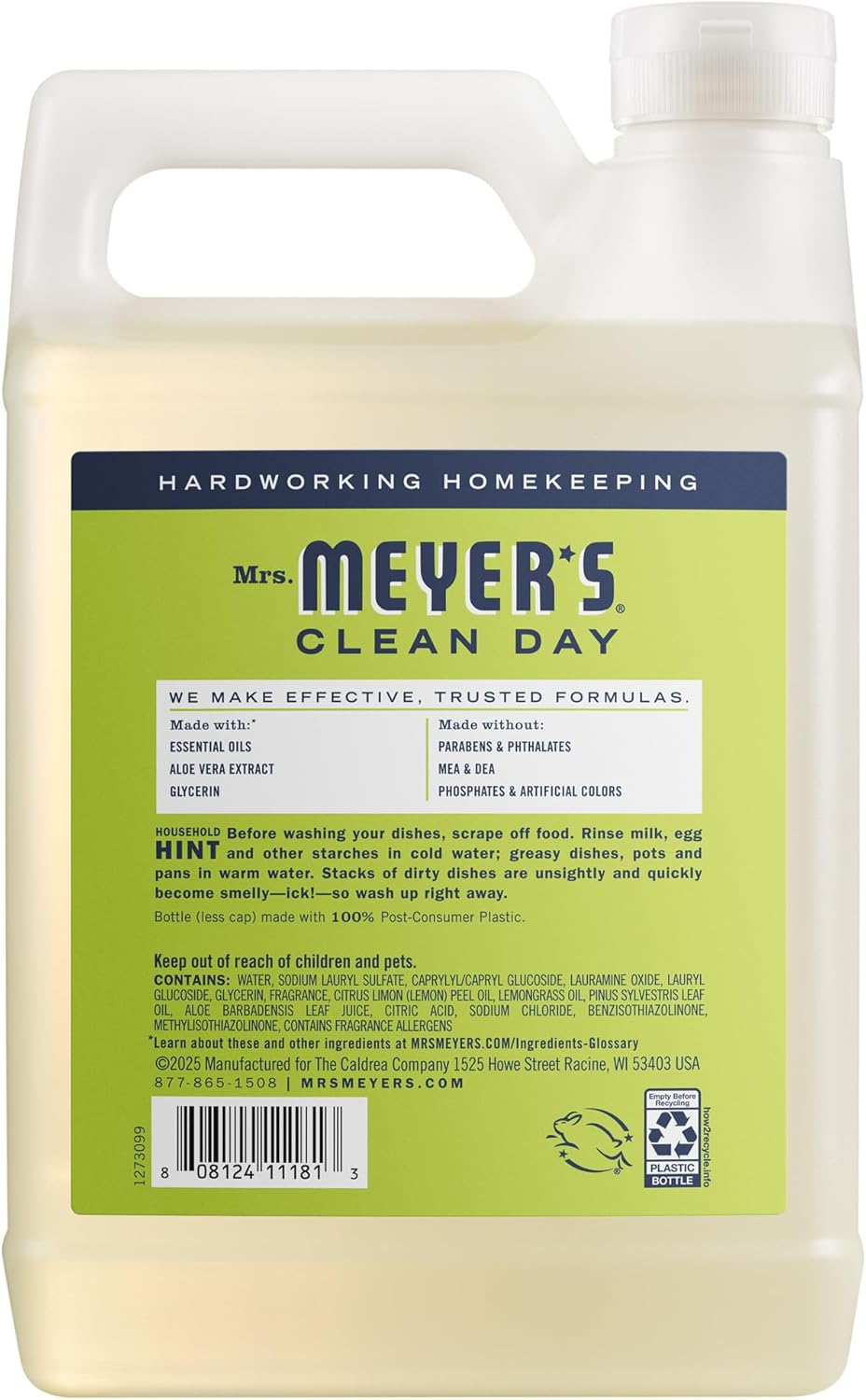
Switching to a concentrated or refillable dish soap sounds straightforward — buy less plastic, pay less per wash, feel better about what goes down the drain. In practice, the market is cluttered with products that look eco-friendly on the shelf but don’t hold up when you read the label. “Concentrated” can mean anything from a mild 2:1 dilution to a 30:1 professional-grade formula; “plant-based” is a marketing phrase, not a certification; and a refill pouch that still ships in plastic weekly isn’t obviously better than a larger single-use bottle. This guide cuts through that noise. Whether you’re buying for a single apartment sink, stocking a cleaning service’s supply closet, or trying to nail down cost-per-use math before committing to a bulk drum, you’ll find a clear framework here — what certifications to trust, how to do the math, and which tradeoffs actually matter at each price tier.
What “Concentrated” Actually Means — and Why It’s Not Standardized
Here’s the first thing to understand: there is no regulatory definition of “concentrated” for dish soap in the United States as of mid-2026. A brand can print that word on any bottle, regardless of actual dilution ratio. The number that matters is the active surfactant percentage — the percentage of cleaning-active ingredients in the formula — or, when that’s not disclosed, the recommended dilution ratio on the label.
Most conventional dish soaps sold in grocery stores run at roughly full-strength use — you apply them directly to a sponge or add a few drops to a filled basin. Standard consumer concentrations are typically 15–25% active surfactant. Genuine concentrates, the kind sold in refill stations or as professional tablets, run 30–50% active surfactant and are meant to be diluted before use or dispensed in micro-doses.
Why this matters for your purchasing decision:
- A 16 oz bottle of a true 30:1 concentrate yields the equivalent of roughly 30 bottles of standard dish soap. The upfront cost looks high; the per-wash cost is usually lower.
- A “concentrated” product at a 2:1 ratio that costs the same per ounce as a standard product is effectively not a deal — and may not be better for the environment if it’s packaged in the same amount of plastic.
- Independent cleaning operators scaling to commercial volume need to know whether a product can be run through a dilution-control dispenser. Most consumer concentrates cannot; products formulated for dilution systems (like Spartan Chemical’s or Betco’s dish and utensil lines) have viscosity and pH profiles engineered for dispenser hardware.
The Good Housekeeping Institute has noted in its dish soap evaluations that grease-cutting efficacy often plateaus above a certain active-ingredient concentration, meaning the most expensive ultra-concentrates don’t always outperform mid-tier concentrates at the actual cleaning task. Dilution ratio and packaging format, not raw potency, tend to be the more relevant variables for most buyers.
The Certifications That Actually Mean Something
The eco-cleaning category has a certification credibility problem. Here’s a quick hierarchy to anchor your sourcing decisions:
EPA Safer Choice — This is the gold standard for dish soap chemistry in the U.S. market. The EPA’s Safer Choice Program reviews every ingredient in a formula against human health and aquatic toxicity criteria. Products that earn the Safer Choice mark have had their full ingredient list reviewed, not just the active surfactants. Per the EPA Safer Choice Standard documentation, certified products must also disclose fragrance components to the EPA (though not always to consumers) and meet biodegradability thresholds. As of mid-2026, Seventh Generation and Method both hold active Safer Choice certifications on several dish soap SKUs; you can verify current certification status on the EPA’s Safer Choice Certified Products List.
USDA Certified Biobased — This certification tells you what percentage of the product’s content comes from renewable biological sources (plant-derived surfactants, for example). It says nothing about toxicity. A product can be 90% biobased and still contain ingredients that are problematic for aquatic ecosystems. Worth noting, not worth treating as a safety certification.
“Plant-based” / “natural” / “non-toxic” — These are marketing terms with no regulatory definition. They tell you nothing about third-party ingredient review. Apartment Therapy’s eco-dish-soap roundup has consistently flagged this distinction in recent editions, pointing readers toward EPA Safer Choice as the verification layer that marketing copy cannot substitute.
Fragrance transparency — One underappreciated variable. “Fragrance” on a label can legally cover hundreds of undisclosed compounds. Safer Choice requires fragrance disclosure to the EPA; brands like Meliora and Blueland have gone further by publicly disclosing full fragrance ingredient lists. For operators supplying clients with chemical sensitivities or running LEED-qualified facilities, full fragrance transparency can become a specification requirement.
By the Numbers: Cost-Per-Wash Comparison
These figures are based on published dilution ratios and mid-2026 retail pricing. Actual yield will vary with water hardness and soil load.
| Format | Example Product Type | Typical Price | Estimated Washes | Cost per Wash |
|---|---|---|---|---|
| Standard 19 oz liquid | Conventional grocery brand | $4–$6 | ~100 | $0.04–$0.06 |
| Eco concentrate, 16 oz | Method / Seventh Generation concentrate | $10–$14 | ~200–250 | $0.04–$0.07 |
| Refill tablet (single dose + water) | Blueland / Cleancult tablet format | $18–$22 / 60 tablets | ~60 | $0.28–$0.37 |
| Bulk concentrate, gallon | Commercial/janitorial grade | $25–$45 | ~800–1,200 | $0.02–$0.05 |
The takeaway: Refill tablets often cost more per wash than a standard eco-liquid, though they reduce plastic shipment weight significantly. The real per-wash savings for residential buyers come from gallon or larger concentrate formats — provided you’re actually diluting correctly and not over-dispensing.
Refill Formats: What Works, What’s Theater
Not all refill systems deliver on their plastic-reduction promise equally. Here’s how the main formats stack up:
Pouch refills (Method, Seventh Generation, Mrs. Meyer’s) are the most widely available. You buy a concentrated or same-strength pouch and decant into your existing bottle. Plastic reduction is real but partial — you’re still receiving a single-use plastic pouch, just lighter than a full bottle. For most households, this is a reasonable and practical middle ground.
Tablet-plus-water systems (Blueland, Cleancult) ship a dry or semi-dry tablet that you dissolve in a reusable glass or aluminum bottle. The packaging is genuinely minimal — often a small cardboard sleeve. The per-wash cost is higher (see the table above), but the shipping footprint is substantially lower since you’re not shipping water weight. Reviewers across aggregated platforms consistently note that tablet dissolution time and foam profile differ from liquid soap, which is a preference variable, not a performance deficiency.
Refill stations — either in-store (some natural grocery co-ops) or through a local milkman-style delivery service — represent the lowest-packaging option, but availability is geographically uneven. For independent cleaning operators who can build a relationship with a local distributor carrying bulk eco-chemistry, this path also opens access to commercial-grade concentrates (Betco’s Green Earth line, for example) that aren’t available in consumer formats.
Bulk drum purchase is the legitimate cost-per-use optimizer for operators running 10 or more residential accounts or any commercial kitchen contract. A 5-gallon pail or 30-gallon drum of commercial dish concentrate from a supplier like Spartan Chemical or Betco, procured through Grainger or Zoro, typically lands at $0.02–$0.04 per wash when diluted correctly — roughly half the cost of premium consumer concentrates. The tradeoffs: you need proper storage (a cool, dry cabinet away from food contact surfaces), appropriate dispensing hardware, and staff training on dilution ratios. Operators who skip the training step often over-dilute (cutting efficacy) or under-dilute (burning through product and raising cost-per-use).
The Greenwashing Signals to Watch For
A few patterns show up repeatedly in owner reviews and ingredient reviews by organizations like the Environmental Working Group and Good Housekeeping:
“Biodegradable” without a timeframe — Nearly everything biodegrades eventually. The relevant question is whether it biodegrades readily in aquatic environments, typically measured as >60% biodegradation within 28 days under OECD 301 test conditions. Look for Safer Choice certification or a brand that cites OECD 301 compliance explicitly.
“Free of phosphates” — True, and relevant (phosphates in dishwashing products contribute to waterway eutrophication), but phosphates were already largely eliminated from dish soap decades ago. Calling this out in 2026 is like advertising that a product is “lead-free.” Not wrong, just not meaningful.
Recycled plastic packaging claims without percentages — “Made with recycled plastic” can mean 5% or 95%. The number matters. Method and Seventh Generation both publish specific recycled content percentages in their sustainability documentation; brands that don’t are often communicating that the number isn’t impressive.
Vague “eco” or “green” labeling with no third-party mark — Per the EPA’s Green Guides framework (enforced by the FTC), environmental claims should be specific, substantiated, and not misleading. Brands leaning heavily on color palette and leaf imagery without any third-party verification are the ones to investigate most carefully before purchasing.
Decision Rules: If X, Then Y
If you’re a residential buyer trying to reduce plastic without spending more per wash: → Start with a pouch refill format from an EPA Safer Choice–certified brand (Seventh Generation or Method both qualify). You’ll hold roughly the same cost-per-wash while meaningfully cutting packaging weight.
If you’re cost-per-wash focused and willing to manage dilution yourself: → Move to a gallon concentrate from a Safer Choice–certified brand. Verify dilution instructions on the label and use a measured dispenser to avoid over-application. Your per-wash cost should drop to the $0.03–$0.05 range.
If you’re an independent operator scaling to commercial accounts: → Evaluate bulk commercial concentrates through your janitorial distributor. Request SDS (Safety Data Sheet) documentation and ask specifically whether the formula is Safer Choice–certified or carries an equivalent third-party verification — many commercial kitchen clients and LEED-certified properties will require it. Run your own cost-per-use math against the dilution ratio before committing to a drum.
If fragrance sensitivity or chemical disclosure is a specification requirement for your clients: → Prioritize brands with full public fragrance ingredient disclosure (Meliora, Blueland) over brands that meet Safer Choice but don’t disclose fragrance publicly. The Safer Choice standard requires disclosure to the EPA, not to end users.
The bottom line: the eco dish soap market has genuinely good options at every price tier, but the gap between a well-sourced concentrate and a greenwashed “natural” product is large enough to matter — both for your wallet and for the environmental claims you’re making to clients. Read the certification before you read the label art.