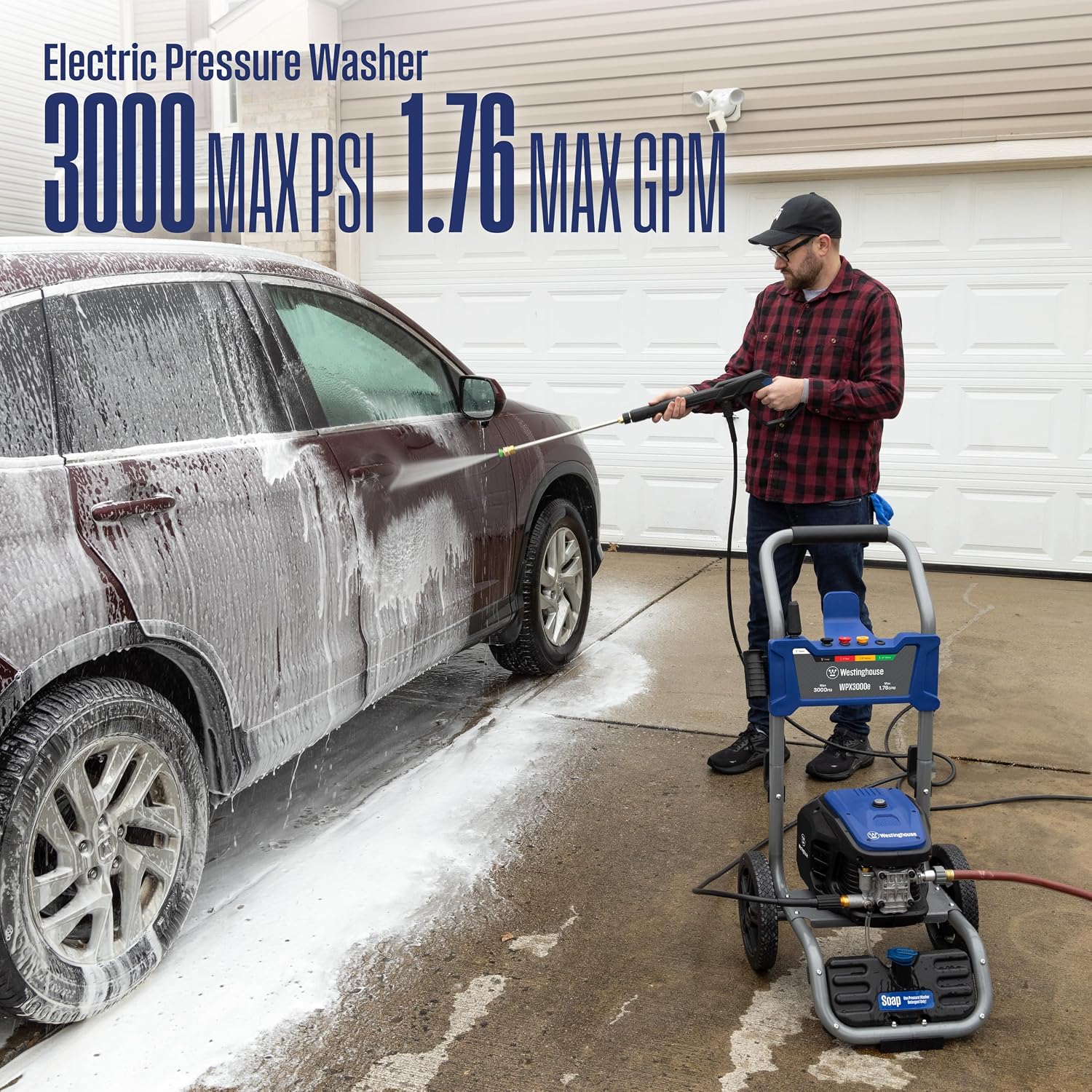
If you’ve spent five minutes in a hardware aisle or scrolling product listings, you’ve seen two numbers plastered on every pressure washer: PSI (pounds per square inch, meaning how hard the water hits the surface) and GPM (gallons per minute, meaning how much water flows through the machine). Marketing leans hard on PSI because big numbers feel powerful. But experienced operators and published spec comparisons tell a more complicated story: raw pressure without sufficient flow is like a very angry garden hose — it can etch concrete and strip paint without actually cleaning anything efficiently. This article breaks down what both numbers mean in practice, shows you the math that determines real-world cleaning speed, and gives you a clear decision frame for choosing a machine whether you’re managing a small commercial account or scaling a residential fleet.
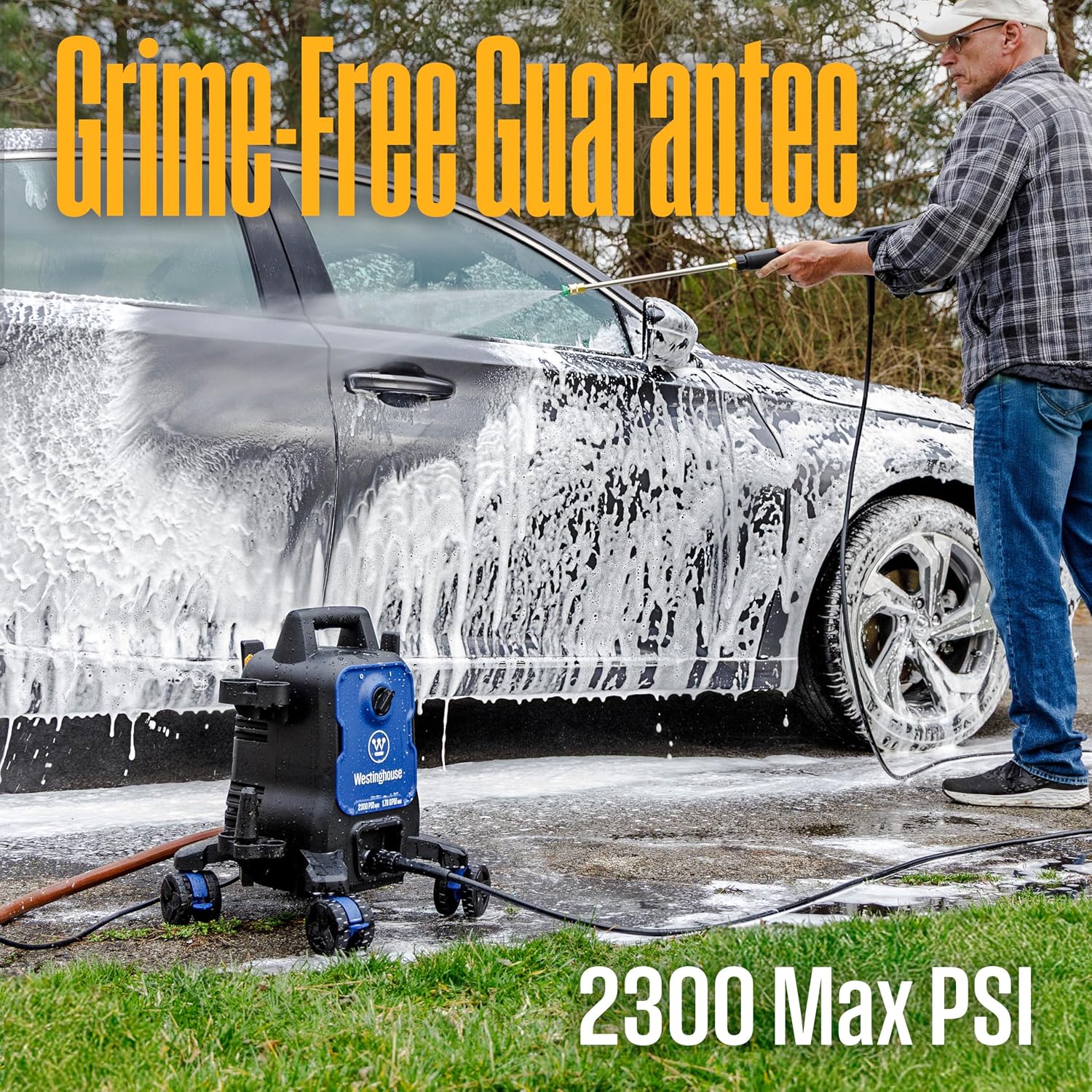
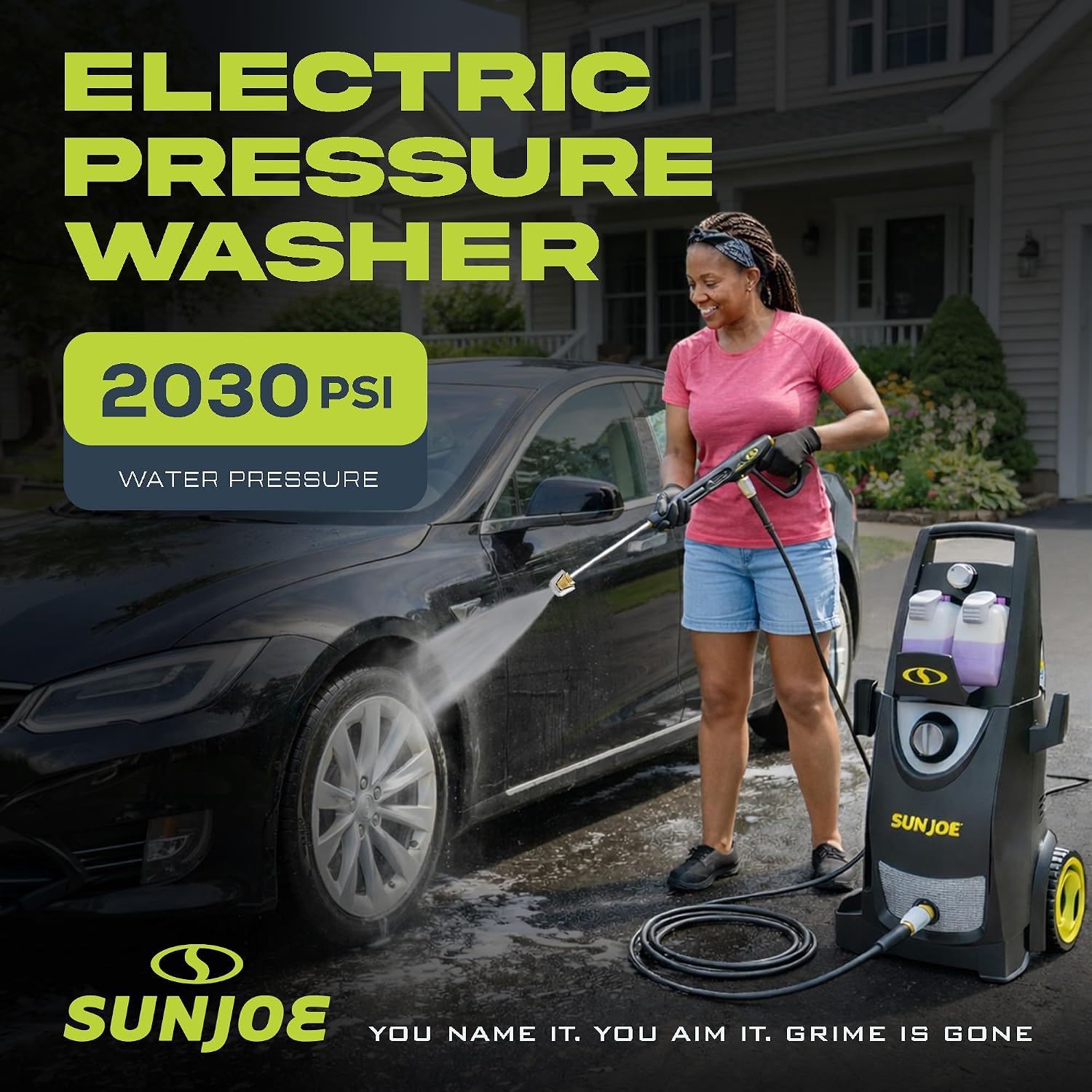
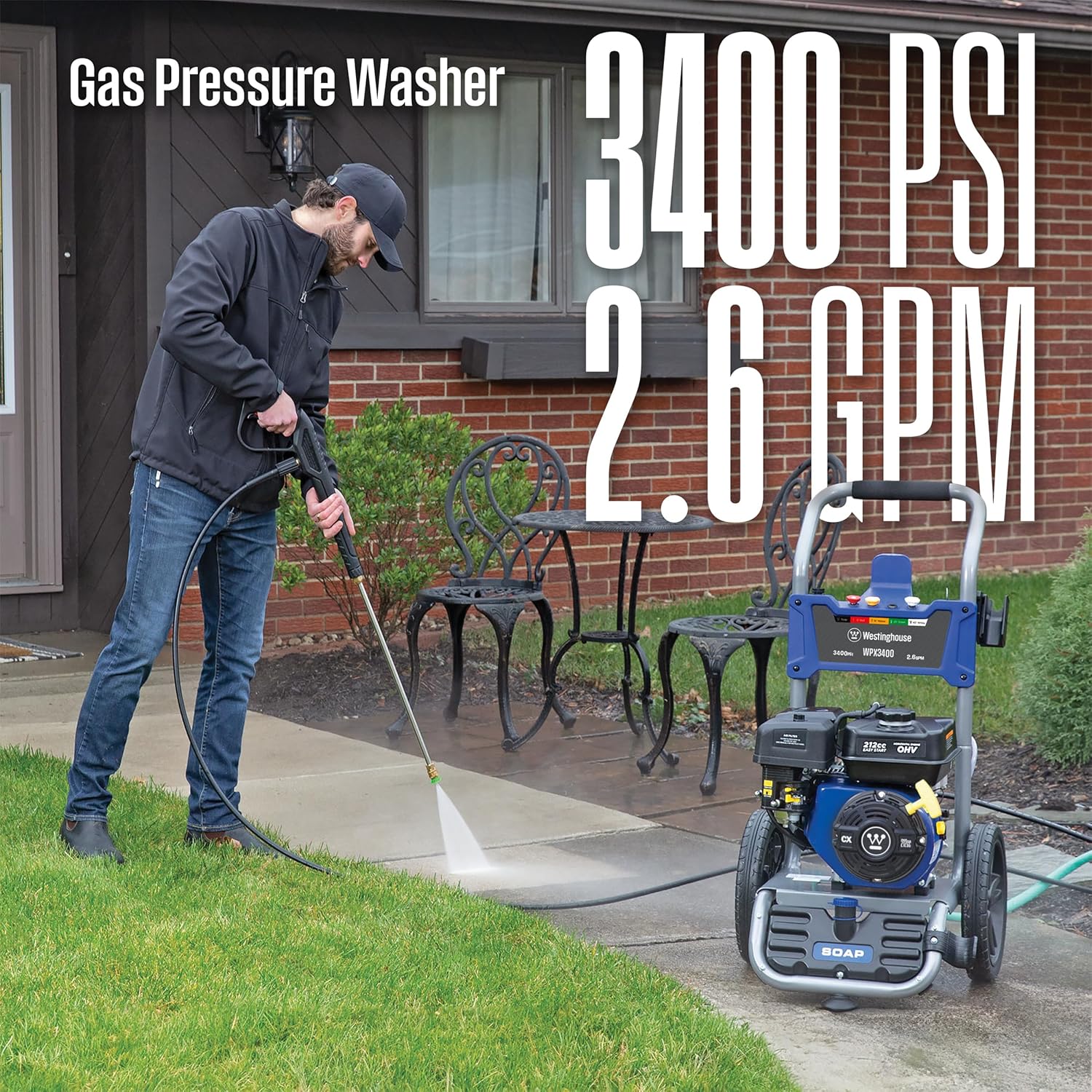
| EDITOR'S PICK[Westinghouse WPX3400 Gas Pressu…](https://www.amazon.com/dp/B094DWHPDL?tag=greenflower20-20) | Mid-tier[Sun Joe Pressure Washer](https://www.amazon.com/dp/B00CPGMUXW?tag=greenflower20-20) | Budget pick[Westinghouse ePX3100 Electric P…](https://www.amazon.com/dp/B083B2M9NT?tag=greenflower20-20) | |
|---|---|---|---|
| PSI | 3400 | 2500 | 2300 |
| GPM | 2.6 | — | 1.76 |
| Power | Gas | Electric | Electric |
| Soap Tank | ✓ | — | ✓ |
| Nozzles | 5 | — | 5 |
| Price | $349.00 | $169.00 | $139.00 |
| See on Amazon → | See on Amazon → | See on Amazon → |
Why “Cleaning Units” Is the Number the Box Doesn’t Advertise
The Pressure Washer Manufacturers’ Association (PWMA), in its Performance Rating Standards for Pressure Washers, defines a composite metric most retailers quietly ignore: Cleaning Units (CU), calculated simply as PSI × GPM. This single number gives you a proportional sense of how fast a machine will move through a job.
Here’s why it matters more than PSI alone: a 2,000 PSI machine at 1.2 GPM produces 2,400 CU. A 1,600 PSI machine at 1.8 GPM produces 2,880 CU. The lower-pressure machine cleans faster on most flat surface work — driveways, sidewalks, vinyl siding — because it’s rinsing away loosened soil at a higher rate. The higher-pressure machine might be better for spot work on grease or chewing gum where you need concentrated force, but it’ll leave you chasing your tail on a 10,000-square-foot parking deck.
By the numbers — common electric pressure washer tiers:
| Tier | Typical PSI | Typical GPM | Cleaning Units | Best application fit |
|---|---|---|---|---|
| Residential / light-duty | 1,600–2,000 | 1.0–1.4 | 1,600–2,800 | Cars, patio furniture, small decks |
| Prosumer / contractor entry | 2,000–2,500 | 1.4–1.8 | 2,800–4,500 | Driveways, fences, residential exteriors |
| Commercial electric | 2,500–4,000 | 2.0–3.0 | 5,000–12,000 | Fleet washing, storefronts, medium hardscape |
According to Consumer Reports’ 2025 pressure washer survey cycle, most buyer dissatisfaction at the residential tier traces back to GPM being too low to rinse effectively — not PSI being insufficient. That pattern holds in aggregated owner reviews across major retailers: complaints about “leaving streaks” or “taking forever” almost always come from machines under 1.4 GPM regardless of their PSI rating.
What PSI Actually Controls — and Where It Can Hurt You
PSI is your precision instrument. It determines whether you’re lifting and breaking the bond between soil and surface, or just moving water around. For jobs that require genuine force — stripping failing paint before a deck refinish, blasting hardened grease from a commercial exhaust vent, or removing road-salt scale from concrete curbing — you need enough PSI to do mechanical work, not just rinse.
The practical thresholds, based on PWMA performance rating guidance and operator guidance indexed by Cleanlink across commercial cleaning industry resources:
- Under 1,500 PSI: safe for cars, soft wood, and screens; undershoots most commercial use cases
- 1,500–2,500 PSI: the residential sweet spot; covers most exterior surfaces without risk of etching
- 2,500–3,500 PSI: contractor-grade; appropriate for concrete, brick, and heavy grime with correct tip selection
- 3,500+ PSI: industrial territory; etching risk on softer surfaces is real, and requires operator training
The tip you attach changes the effective PSI at the surface dramatically. A 0° (red) tip concentrates all force on a pencil-point; a 40° (white) tip disperses it across a wide fan. This means two operators running the same machine at 2,800 PSI can produce wildly different results — and wildly different damage — based purely on tip choice. If you’re building out a crew, tip selection needs to be part of your standard operating procedure before anyone touches client property.
Where high PSI creates liability: Wirecutter (New York Times), in its updated 2025 guide “The Best Pressure Washers,” flags a consistent pattern in owner reviews — surface damage claims on composite decking, aluminum siding, and weathered mortar joints cluster around machines rated 2,500+ PSI used with narrow tips by operators who assumed more pressure meant faster results. For a cleaning business, that’s a difficult client conversation and potentially a repair bill.
The GPM Argument for Commercial Operators
If PSI is precision, GPM is throughput. And for anyone billing by the job or managing labor cost against hourly productivity, GPM is where you find the money.
Here’s the math that makes this concrete. Say you’re quoting a 15,000-square-foot commercial parking structure. The Cleaning Industry Research Institute (CIRI), in its Water Efficiency in Commercial Pressure Washing Technical Bulletin (2024), suggests an operator can expect to cover roughly 1,500–2,500 square feet per hour on sealed concrete with appropriate equipment, depending on soil load. A machine at 1.4 GPM versus 2.2 GPM isn’t just moving more water — it’s allowing faster surface saturation, better detergent activation, and faster rinse cycles.
At a conservative estimate of 1,800 sq ft/hr (low-GPM machine) versus 2,400 sq ft/hr (higher-GPM machine) on that 15,000 sq ft job:
- Low-GPM machine: ~8.3 labor hours
- Higher-GPM machine: ~6.25 labor hours
At $35/hr loaded labor cost, that’s $70 in recovered margin per job — before you factor in that the higher-GPM machine may let one person handle what otherwise needed two passes. Across a 30-job commercial contract year, the throughput difference alone can dwarf the price gap between equipment tiers.
ISSA’s Cleaning Industry Management Standard (CIMS) Green Building specification guidance (2024 edition) also notes that higher GPM doesn’t automatically mean more water waste — a faster-rinsing machine that completes the job in fewer passes can actually use less total water than a slower low-GPM machine that requires the operator to make multiple slow sweeps.
Decision Frame: Which Machine Tier Fits Your Work?
This is where the practitioner rubber meets the road. The answer depends on three variables: surface type, soil type, and job frequency. The following three tiers map to the most common operator profiles in residential-to-commercial transition.
Budget-Tier: Residential and Light Prosumer Machines (Under $250)
Machines in this range — typically 1,600–2,000 PSI and 1.0–1.4 GPM — are designed for intermittent home use. They work well for cars, patio furniture, small decks, and seasonal driveway cleaning. Their cleaning unit ceiling of roughly 2,800 CU means they’ll complete those jobs acceptably, though slowly by commercial standards.
The critical limitation here is duty cycle. Residential-class machines are typically rated at 50–70% duty cycle, meaning they’re engineered for breaks between runs — not four-hour commercial sessions. Consumer Reports’ 2025 reliability data identifies pump failure as the leading repair category for electric pressure washers used commercially, and that failure rate correlates strongly with machines operated above their rated duty cycle. If you’re considering one of these for anything beyond occasional residential work, the pump warranty terms are worth reading carefully.
Sun Joe and Greenworks both offer entry-level units in this price range that owner reviews on Cleanlink-indexed contractor forums consistently describe as adequate for light residential routes — but operators report degraded pump performance within 12–18 months when used at daily commercial pace.
Westinghouse
$139.00
In stock on Amazon
Check price on AmazonMid-Tier: Prosumer and Contractor-Entry Machines ($250–$600)
This is the most competitive segment for operators transitioning from residential to small commercial accounts. Machines here typically run 2,000–2,500 PSI and 1.4–2.0 GPM, producing 2,800–5,000 cleaning units — enough to handle driveways, fences, residential exterior washing, and light commercial hardscape at a productive pace.
The Kärcher K5 Premium Smart Control, rated at 2,000 PSI and 1.4 GPM with an integrated pressure-adjustment feature, sits at the high end of this range. Reviewers on commercial cleaning boards note it’s genuinely useful for operators who switch between delicate and hard surfaces on the same route, though its GPM positions it as a slower finisher on large flat work compared to higher-flow machines in the same tier. Per the Kärcher North America K5 Premium Smart Control product specification sheet (2025), the machine is rated for 80% duty cycle — a meaningful step up from residential-class reliability.
Wirecutter (New York Times), in “The Best Pressure Washers” (updated 2025), recommends mid-tier prosumer machines as the best entry point for operators who want genuine versatility without stepping into commercial-class pricing. The key decision within this tier: if your dominant job type is large flat surface work, prioritize the machines at the high end of the GPM range (1.8–2.0 GPM) even if that means accepting slightly lower PSI.
Sun
$169.00
In stock on Amazon
Check price on AmazonPremium-Tier: Commercial-Class Electric Machines ($600 and Above)
At this level, the spec sheet starts reflecting genuine production-pace engineering. Commercial-class electric machines — Kärcher’s HD series and Nilfisk’s MC series are spec-sheet leaders in this bracket — typically offer 2,500–4,000 PSI and 2.0–3.0 GPM, with duty cycle ratings at 80–100% and thermal overload protection with automatic shutoff rather than permanent pump damage.
The throughput math at this tier is where operators find margin. Running the CIRI-sourced productivity estimates from the parking structure example above, a 2.0+ GPM commercial machine recovers its price premium over a mid-tier unit in labor savings within a handful of large commercial jobs. For operators running a 20-plus-job monthly commercial schedule, the payback window is typically under three months.
ISSA’s CIMS guidance specifically supports higher-flow commercial machines for green-building-adjacent cleaning contracts, noting that total water consumption per square foot often decreases with higher-GPM equipment when job completion requires fewer operator passes. That efficiency argument is increasingly useful when bidding contracts with sustainability requirements.
Duty cycle confirmation is non-negotiable at this purchase level: confirm the rating in the manufacturer spec sheet before committing. A machine rated at 2,800 PSI / 2.2 GPM / 60% duty cycle is the wrong tool for a six-hour job day regardless of how the cleaning-unit math looks on paper.
Westinghouse
$349.00
In stock on Amazon
Check price on AmazonThe One Mistake That Costs Operators the Most
Across operator guidance indexed by Cleanlink and flagged in Consumer Reports’ 2025 pressure washer reliability data, the most common equipment mistake practitioners make when scaling from residential to commercial work is not buying too little PSI — it’s buying too little GPM and then absorbing the labor cost difference on every job without diagnosing why margins are tighter than the quote implied.
PSI thresholds for commercial concrete work (2,000+ PSI) are easy to hit in almost every mid-tier machine. GPM thresholds that support genuine production pace (1.8+ GPM) require deliberate selection and often a step up in price. The operators who run the throughput math before purchase — rather than after a season of slow jobs — are the ones whose equipment cost shows up as an investment rather than a regret.
The Short Version
PSI and GPM are both real specs with real consequences, but they answer different questions. PSI tells you whether the machine can do the mechanical work your surface requires. GPM tells you how fast you’ll finish and how your labor costs will land. Cleaning Units (PSI × GPM), as defined by the PWMA’s Performance Rating Standards, give you an apples-to-apples throughput comparison across models. And duty cycle tells you whether the machine can sustain that output across a commercial workday.
The clearest decision rule: if your jobs are mostly flat, high-volume, and time-sensitive, prioritize GPM first, then confirm PSI is adequate (2,000+ for commercial concrete). If your jobs are mixed surfaces, spot-intensive, or involve delicate substrates, prioritize PSI range with adjustability and price jobs with realistic productivity estimates. If you’re buying one machine for both, calculate your dominant job type by revenue, buy for that use case, and use tip selection to manage the exceptions.
The spec sheet will tell you most of what you need to know — if you know which number to read first.