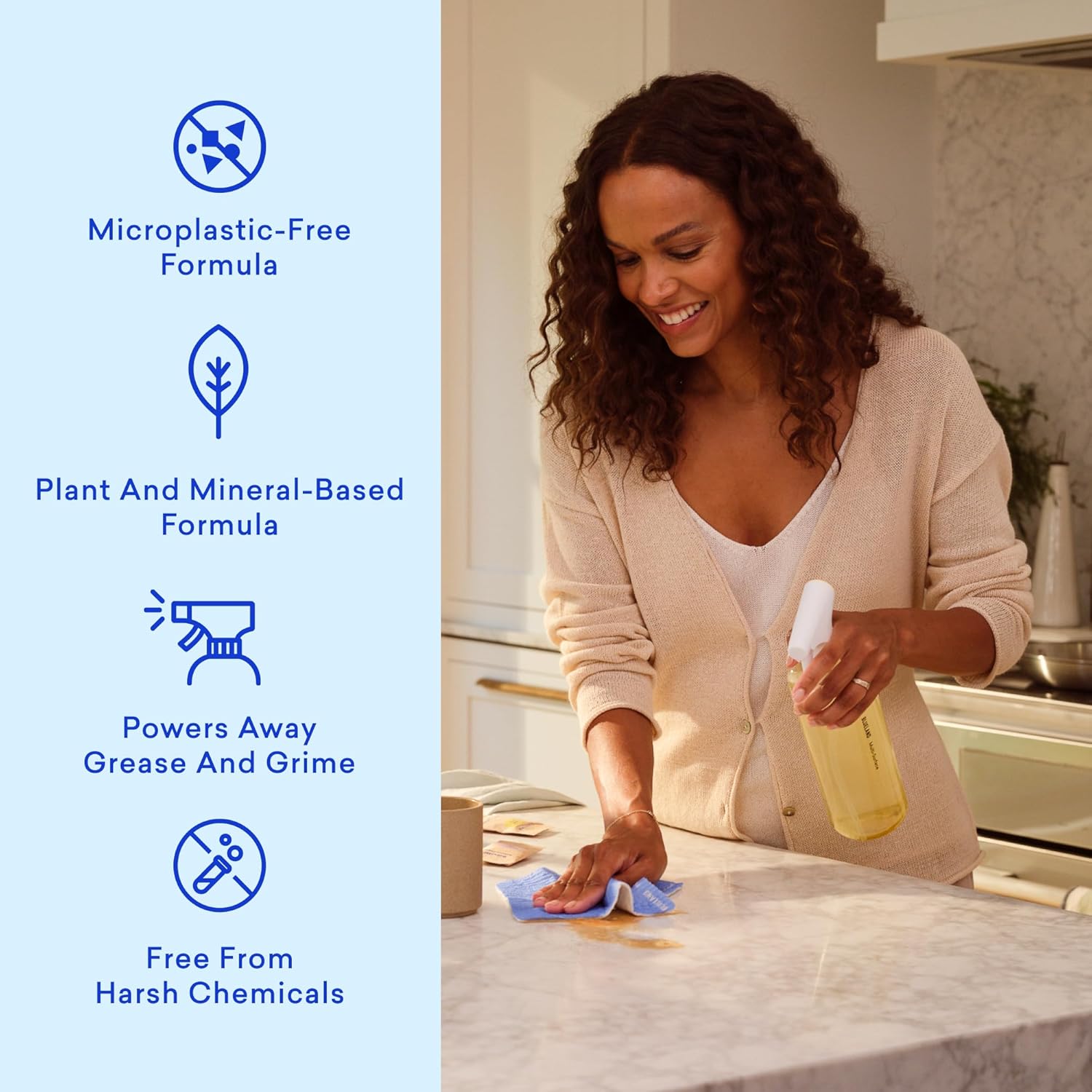
Cleaning tablets and refill pods are exactly what they sound like: small, concentrated doses of cleaning chemistry — a dissolvable tablet, a gel capsule, or a liquid pod — that you drop into a reusable spray bottle and top off with tap water. The finished product works the same as a ready-to-use cleaner from the store shelf, but you’re shipping and storing a fraction of the weight and plastic. Brands like Blueland, Grove Collaborative, Meliora, and Replenish have built entire subscription businesses on this format. The pitch is appealing: less single-use plastic, lower carbon footprint from shipping, and a lower ongoing cost once you’ve bought the bottle. But “eco-friendly” is not a regulated term, and the gap between a genuinely certified product and one riding a green-label aesthetic can be significant. This guide will walk you through the specific checkpoints that separate verified claims from marketing copy — so you can make a subscription or bulk-purchase decision with open eyes.
The Certification Stack: What Actually Means Something
When a tablet or pod claims to be “plant-based,” “biodegradable,” or “non-toxic,” none of those terms trigger any legal standard. They’re marketing language. The certifications that carry actual evidentiary weight are a short list.
EPA Safer Choice is the most rigorous U.S. benchmark for cleaning chemistry. Per the EPA Safer Choice Program’s certification standards documentation, every ingredient — not just the active one — must pass a safety screen for human health and environmental fate before a product earns the label. Crucially, this covers surfactants (the compounds that lift grease), fragrances, preservatives, and processing aids. A product can be 95% water, have one plant-derived surfactant, and still fail Safer Choice if its preservative system doesn’t clear the screen. Check the EPA’s Safer Choice product search database directly; don’t rely on brand website badges, which sometimes reflect lapsed or pending applications.
EPA Design for the Environment (DfE) is a predecessor designation that applied specifically to antimicrobial and disinfectant formulas. Per the EPA’s DfE program documentation, it signals that a formulator collaborated with EPA to evaluate ingredient alternatives — but it does not mean every ingredient is fully screened at the Safer Choice tier. If a tablet claims both disinfection efficacy and eco status, you need an EPA registration number (the format is XXXXX-XXX) to verify it’s actually registered as a disinfectant, separate from any green-chemistry claim.
NSF/ANSI 61 and NSF/ANSI 372 matter if pods or tablets contact potable water systems — relevant for facilities managers running building services.
USDA Certified Biobased tells you what percentage of carbon in the formula comes from biological (plant or animal) sources rather than petroleum. A 95% biobased score sounds impressive, but biobased origin does not equal biodegradable and does not equal non-toxic. Palm-derived surfactants score high on biobased metrics and low on deforestation-related sustainability metrics. The Good Housekeeping Institute’s concentrated refill round-up (2025) flagged exactly this gap: several highly-rated “natural” products carried robust biobased scores while using palm kernel oil derivatives with contested supply chain sustainability.
ISSA’s CIMS Green Building Addendum is the relevant standard for commercial cleaning operators. Per ISSA documentation, CIMS-GB requires documented procedures for selecting environmentally preferable products — which means your vendor needs to be able to hand you a spec sheet tying the tablet chemistry to a recognized third-party certification, not just a brand sustainability pledge.
Bottom line on certs: Safer Choice is the one to lead with for residential and light-commercial buyers. For disinfection claims, verify the EPA registration number independently. Everything else is a supporting data point, not a primary one.
Dilution Ratios, Yield Math, and the Real Cost-Per-Use
The economics of tablets and pods hinge entirely on dilution accuracy. A tablet that dissolves into 32 oz of finished cleaner at a 1:64 dilution (one part concentrate to 64 parts water) has a very different cost profile than one that dissolves into 16 oz. Brands don’t always make this easy to compare.
By the numbers — three formats at a glance (2026 market pricing):
| Format | Unit price (MSRP) | Yield per unit | Cost per finished oz |
|---|---|---|---|
| Blueland Multi-Surface tablet | ~$0.35/tablet | 20 oz | ~$0.018/oz |
| Replenish pod (refill system) | ~$0.55/pod | 32 oz | ~$0.017/oz |
| Spartan Chemical 1:64 concentrate (gallon) | ~$18.00/gal | 832 oz finished | ~$0.022/oz |
Pricing sourced from published retail and distributor list prices, May 2026. Bulk/subscription pricing reduces tablet and pod cost further.
The cost-per-finished-ounce math is where practitioners often discover that tablets and pods aren’t dramatically cheaper than well-priced dilution-control concentrates from commercial suppliers — they’re roughly comparable at small scale, and commercial concentrates tend to win at volume. Where tablets and pods genuinely outperform is in labor and waste reduction: no measuring, no spills, no dilution errors by staff who aren’t trained, and no 32-oz HDPE bottles in the dumpster every week.
Consumer Reports’ 2025 sustainable cleaning products review noted that operators running 10-20 employee residential cleaning routes found the no-measure format reduced chemistry waste by an estimated 15–20% compared to pour-and-measure protocols, simply by eliminating over-dilution and under-dilution errors. That’s not a trivial number when you’re buying chemistry at volume.
One trap to watch: “tablet” products with vague yield instructions (“dissolve in a bottle of water”) that don’t specify the target bottle size. Without a stated final volume, you can’t calculate concentration, you can’t verify cleaning efficacy benchmarks, and you can’t do honest cost math. That ambiguity is itself a red flag about the brand’s transparency posture.
Subscription Mechanics and the Lock-In Risk
Most tablet and pod brands are subscription-first businesses. That model has legitimate advantages — consistent pricing, auto-replenishment, slightly lower per-unit cost — and real risks you should evaluate before committing.
Formulation changes without notice. Because tablets and pods are small-format products with high reorder rates, brands sometimes adjust chemistry between production runs without updating packaging. Consumer Reports has documented instances where reformulated products lost (or gained) EPA Safer Choice status without clear labeling transitions. If you’re specifying a product for a LEED-certified building or a green cleaning contract, you need written confirmation that the formulation you’re subscribing to is the certified one — not a reformulated successor.
Reusable bottle compatibility. Several pod systems (Replenish and Cleancult, notably) are built around proprietary bottle bases with integrated pods. If the brand discontinues, pivots, or is acquired, you may be holding a fleet of bottles that don’t accept third-party refills. Clean Link’s 2024 coverage of dilution control sustainability flagged this as an emerging issue for facilities managers who had standardized on pod-based systems only to face compatibility gaps during brand transitions.
Subscription cancellation terms. Starter kits are often subsidized — a $5 starter bottle kit is priced to lock you into a recurring pod purchase. Check the cancellation window. Some brands require 30-day advance notice; some auto-renew annual plans. This isn’t unique to cleaning products, but it’s worth auditing before onboarding a subscription across a multi-unit property portfolio or a commercial account.
Disinfection claims under subscription pressure. Disinfectants are registered by the EPA under FIFRA (the Federal Insecticide, Fungicide, and Rodenticide Act). A tablet or pod that claims to disinfect must carry an EPA registration number, and you should verify it in the EPA’s pesticide product search. Some brands market “sanitizing” or “disinfecting” tablets that are not FIFRA-registered — which means the claim is unverified and potentially illegal. The distinction matters: if you’re operating a commercial account under a contract that specifies disinfection (healthcare-adjacent, food service, schools), using an unregistered product is a compliance gap.
The Audit Checklist Before You Subscribe
Here’s the practical framework to apply to any tablet or pod product before signing up:
-
Pull the EPA Safer Choice database entry. Search by brand and product name at epa.gov/saferchoice. If it’s not there, the badge on the website is aspirational, not verified.
-
Locate the EPA registration number if disinfection is claimed. Format: XXXXX-XXX. Verify it in the EPA pesticide product search. No number = no verified disinfection claim.
-
Calculate cost-per-finished-ounce. Divide unit price by stated yield in ounces. Compare against your current chemistry baseline.
-
Read the dilution instruction specifically. “Add to a bottle” is not a dilution ratio. “Add to a 16-oz bottle” gives you a ratio. You need the ratio to evaluate concentration and efficacy.
-
Check the subscription cancellation policy before checkout. Look for auto-renewal clauses and advance-notice requirements.
-
Request a Safety Data Sheet (SDS). Legitimate chemistry suppliers provide these. An SDS lists ingredients at the hazard-communication level and lets you cross-reference against your facility’s chemical management program or a client’s approved-products list.
-
Verify the biobased certification isn’t doing the eco-heavy-lifting. USDA Certified Biobased is real, but it’s not a toxicity or biodegradability screen. Safer Choice is.
If X, Then Y: Decision Rules
If you’re an independent residential cleaning operator scaling routes: Tablet and pod formats are worth evaluating primarily for labor waste reduction and per-job simplicity, not dramatic cost savings. Run the per-ounce math against your current dilution-control chemistry. If the numbers are within 20% and the format eliminates dilution errors, the operational gain is real.
If you’re a facilities manager specifying for a green building contract: Safer Choice certification and an auditable certification date are non-negotiables. Build both into your vendor RFP. Don’t accept a brand sustainability pledge as a substitute.
If you’re a homeowner or apartment dweller buying for personal use: Blueland and Grove Collaborative both carry Safer Choice certification on specific SKUs (verify current status in the EPA database — formulations do change). The tablet format genuinely reduces plastic waste and is priced competitively. Just don’t assume the whole product line is certified — check product by product.
If you need verified disinfection: Tablets and pods are a weak format for this use case as of mid-2026. The field of FIFRA-registered tablet-format disinfectants is thin, and the ones that exist often require longer dwell times than ready-to-use registered alternatives. Use a registered RTU or dilutable concentrate and treat the tablet format as a supplement for non-disinfection cleaning tasks.
The eco-cleaning tablet category has real substance — and real noise. The audit process above takes about 15 minutes per product and is the difference between a green cleaning program that holds up to scrutiny and one that looks good on paper until a client or inspector checks the receipts.